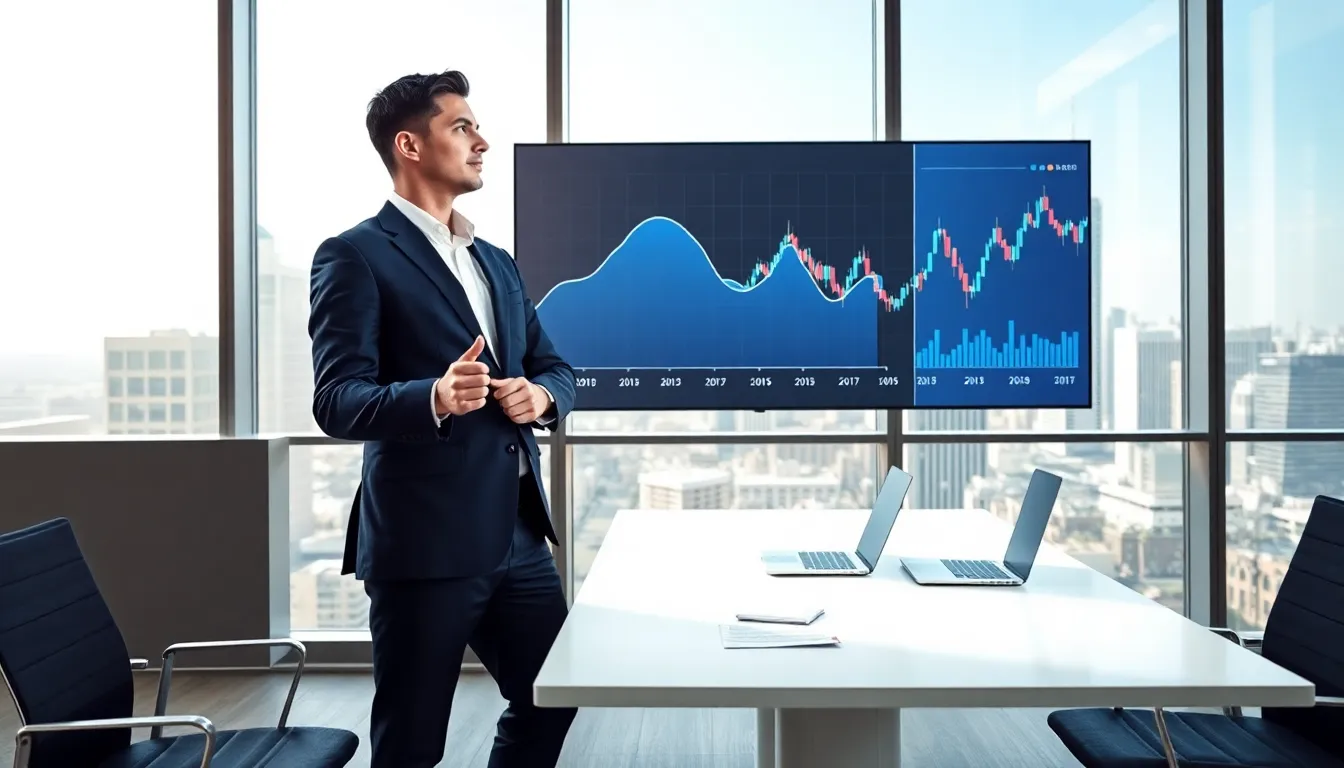

Economic trends vs. market predictions, these two terms often get tossed around interchangeably, but they represent very different concepts. Understanding this distinction matters for investors, business owners, and anyone trying to make sense of financial news.
Economic trends describe long-term patterns in how economies grow, contract, or shift over time. Market predictions, on the other hand, attempt to forecast short-term price movements in stocks, bonds, or commodities. One looks backward and forward across years or decades. The other tries to guess what happens next week or next quarter.
This article breaks down the key differences between economic trends and market predictions. It explains how each one works, why they matter, and how to use both when making financial decisions in 2025 and beyond.
Table of Contents
ToggleKey Takeaways
- Economic trends describe long-term patterns spanning years or decades, while market predictions attempt to forecast short-term price movements over days or quarters.
- When comparing economic trends vs. market predictions, trends offer more stability and reliability, whereas most market predictions fail to outperform simple buy-and-hold strategies.
- Use economic trends to guide strategic decisions like retirement planning, asset allocation, and career choices rather than relying on short-term forecasts.
- Key indicators for tracking economic trends in 2025 include GDP growth, employment data, inflation metrics, and Federal Reserve interest rate decisions.
- Smart investors combine economic trend analysis with healthy skepticism toward market predictions—trends provide foundation, while predictions may only fine-tune timing.
What Are Economic Trends?
Economic trends represent sustained movements in economic activity over extended periods. They show how employment rates, GDP growth, inflation, and consumer spending change across months, years, or even decades.
Think of economic trends as the tide rather than individual waves. A wave might crash high or low on any given day, but the tide follows a predictable pattern. Economic trends work similarly, they reveal the underlying direction of an economy even though short-term fluctuations.
Some common examples of economic trends include:
- Rising inflation rates that persist over multiple quarters
- Declining unemployment during extended periods of growth
- Shifting consumer preferences toward certain industries
- Long-term interest rate patterns set by central banks
Analysts identify economic trends by studying historical data and tracking key indicators over time. The Bureau of Labor Statistics, Federal Reserve, and other agencies publish this data regularly. When multiple indicators point in the same direction for sustained periods, economists identify a trend.
Economic trends don’t predict specific outcomes. They describe momentum. An upward economic trend in manufacturing doesn’t guarantee any single company will succeed. It simply means the sector is growing overall.
This distinction becomes important when comparing economic trends vs. market predictions. Trends describe what has happened and what appears likely to continue. They don’t make promises about tomorrow’s stock prices.
Economic Trends vs. Market Predictions
The difference between economic trends vs. market predictions comes down to scope, timeframe, and methodology.
Economic trends analyze broad patterns across entire economies or sectors. They use historical data spanning years or decades. Market predictions attempt to forecast specific price movements in shorter windows, often days, weeks, or quarters.
Here’s a direct comparison:
| Factor | Economic Trends | Market Predictions |
|---|---|---|
| Timeframe | Years to decades | Days to quarters |
| Scope | Entire economies or sectors | Individual assets or markets |
| Data sources | Government statistics, economic indicators | Technical analysis, sentiment, news |
| Reliability | Generally more stable | Often inaccurate |
| Use case | Strategic planning | Trading decisions |
Market predictions rely heavily on speculation. Analysts examine chart patterns, trading volumes, and investor sentiment to guess where prices will move. Studies consistently show that most market predictions fail to beat simple buy-and-hold strategies over time.
Economic trends offer more stability but less precision. They won’t tell anyone when to buy or sell a specific stock. They will, but, show which sectors are growing and which are contracting.
Consider this real-world example: Economic trends clearly showed the shift toward e-commerce accelerating throughout the 2010s. That trend was visible in retail sales data, employment figures, and consumer surveys. But market predictions about specific e-commerce stocks varied wildly from analyst to analyst.
Smart investors use both tools differently. Economic trends inform long-term strategy. Market predictions, taken with healthy skepticism, might influence short-term tactics.
How Economic Trends Shape Financial Decisions
Economic trends influence financial decisions at every level, from individual retirement planning to corporate investment strategies.
For individual investors, understanding economic trends vs. market predictions helps set realistic expectations. Someone planning for retirement in 2045 should care more about long-term economic trends than next quarter’s market predictions. Will healthcare costs continue rising? Will automation reshape employment? These trend-based questions matter more than any analyst’s price target.
Businesses use economic trends to guide expansion decisions. A company considering a new factory looks at manufacturing trends, labor market trends, and regional economic growth patterns. These indicators reveal whether demand will likely support the investment over its useful life.
Practical Applications
Asset allocation benefits from economic trend analysis. When economic trends point toward inflation, investors might shift toward commodities or real estate. When trends suggest deflation, bonds become more attractive.
Career planning also responds to economic trends. Workers entering the job market benefit from understanding which industries are growing and which are shrinking. Economic trends in technology, healthcare, and renewable energy have shaped career decisions for millions.
Business strategy depends on reading economic trends correctly. Companies that recognized the trend toward remote work early positioned themselves well. Those that dismissed it as temporary struggled to adapt.
The key insight: economic trends provide context for decisions, while market predictions attempt to provide timing. Most financial advisors recommend basing major decisions on trends rather than predictions.
This doesn’t mean ignoring market predictions entirely. It means understanding their limitations. A prediction about next month’s stock price carries far less certainty than a documented economic trend spanning five years.
Reading Economic Indicators in 2025 and Beyond
Reading economic trends in 2025 requires attention to several key indicators. These data points reveal the direction of the economy and help distinguish genuine trends from temporary noise.
GDP growth rates remain the most watched indicator. The U.S. economy’s performance sets the tone for global markets. Quarterly GDP reports show whether the economy is expanding or contracting.
Employment data tells another part of the story. Unemployment rates, job creation numbers, and wage growth reveal how economic trends affect ordinary workers. Strong employment typically signals healthy economic trends.
Inflation metrics like the Consumer Price Index (CPI) and Producer Price Index (PPI) track price changes over time. These indicators help investors and businesses anticipate purchasing power changes.
Interest rate decisions from the Federal Reserve directly influence economic trends. Rate increases typically slow economic activity. Rate cuts tend to stimulate growth.
For 2025 specifically, analysts are watching:
- How artificial intelligence adoption affects productivity trends
- Whether housing market corrections stabilize or deepen
- How global supply chains continue reshaping after recent disruptions
- Energy transition impacts on traditional and renewable sectors
These factors will shape economic trends for years. Understanding them helps separate signal from noise when evaluating market predictions.
The best approach combines economic trend analysis with healthy skepticism toward short-term predictions. Trends provide the foundation. Predictions, when they prove accurate, might fine-tune timing. But betting heavily on predictions while ignoring trends rarely ends well.